
Market Outlook
Towards sustainable production
In 2024, sustainability remained a key focus for the global film industry, with international studios and platforms accelerating the adoption of renewable energy, footprint tracking, and green certifications. In Europe alone, over 100 productions were certified under initiatives like the EU Green Film protocols. In Spain, broadcasters, streamers and the Ministry of Culture met to address environmental challenges, while festivals like Another Way Film Festival in Madrid continued raising awareness of climate issues.
Spain maintained its position as a leading destination for international service production, attracting numerous UK and US projects. At Palma Pictures, we saw growing demand for sustainable solutions both in Mallorca and on the mainland. This is why we introduced the role of Eco Manager, responsible for supervising and ensuring sustainable practices on every shoot.
Nationwide, productions reduced travel emissions by using hybrid and electric vehicles, hiring local crew and optimising logistics. Sets increasingly adopted green power, water refill stations, bio catering, and footprint tracking aligned with EU Green Film standards. Meanwhile, Madrid and Barcelona productions requested more energy-efficient lighting and eco-friendly set materials, supported by film offices with eco-centric permit policies.
Industry engagement also increased, with over 300 professionals attending the Green Film Forum in Mallorca to share practical solutions. Sustainability reports, green coordinators, and Albert-aligned processes are now common requirements across shoots, reflecting a clear shift towards more responsible production practices.

AI’s Growing Role in Production Workflows
In 2024, artificial intelligence has firmly positioned itself at the heart of commercial advertising, scripted film and TV, and unscripted formats. The global AI in media and entertainment market is valued at up to 26 billion USD this year, with forecasts projecting growth to nearly 100 billion USD by 2030, driven by rapid adoption across creative and production processes.
Generative content tools like OpenAI’s Sora and Google’s Veo are redefining early-stage creative work, enabling text-to-image and text-to-video generation for faster storyboarding, mood testing, and pitching. In advertising, AI now powers rapid A/B testing of visuals and messages, creates personalized ad versions at scale, and automates dubbing and subtitling.
Across production workflows, AI-driven services handle editing, voice overs, metadata tagging, deepfake-style VFX (such as de-aging and face replacement), predictive analytics and automated subtitling, enhancing efficiency in scripted, unscripted, and ad projects alike. Adoption rates continue to surge, with 83% of content professionals reporting generative AI use, particularly within agencies, where it accelerates pitches with rapid visual proof of concept and voice tests.
At Palma Pictures, AI has also played a role in localisation workflows, such as shoots where talent was filmed facing camera to enable mouth replacement in post-production, allowing multiple language versions to be created seamlessly for global campaigns.
AI’s impact on market economics is equally significant. In 2024, 70% of global ad revenue decisions were informed by AI, with this figure expected to exceed 90% by 2029. Yet despite its transformational role, AI has not replaced human creativity; it has enhanced it. Teams are leveraging AI as a creative assistant to boost speed, reduce costs, support localization and refine audience targeting at scale, redefining how content is conceptualised, produced and delivered.
Shifting production models.
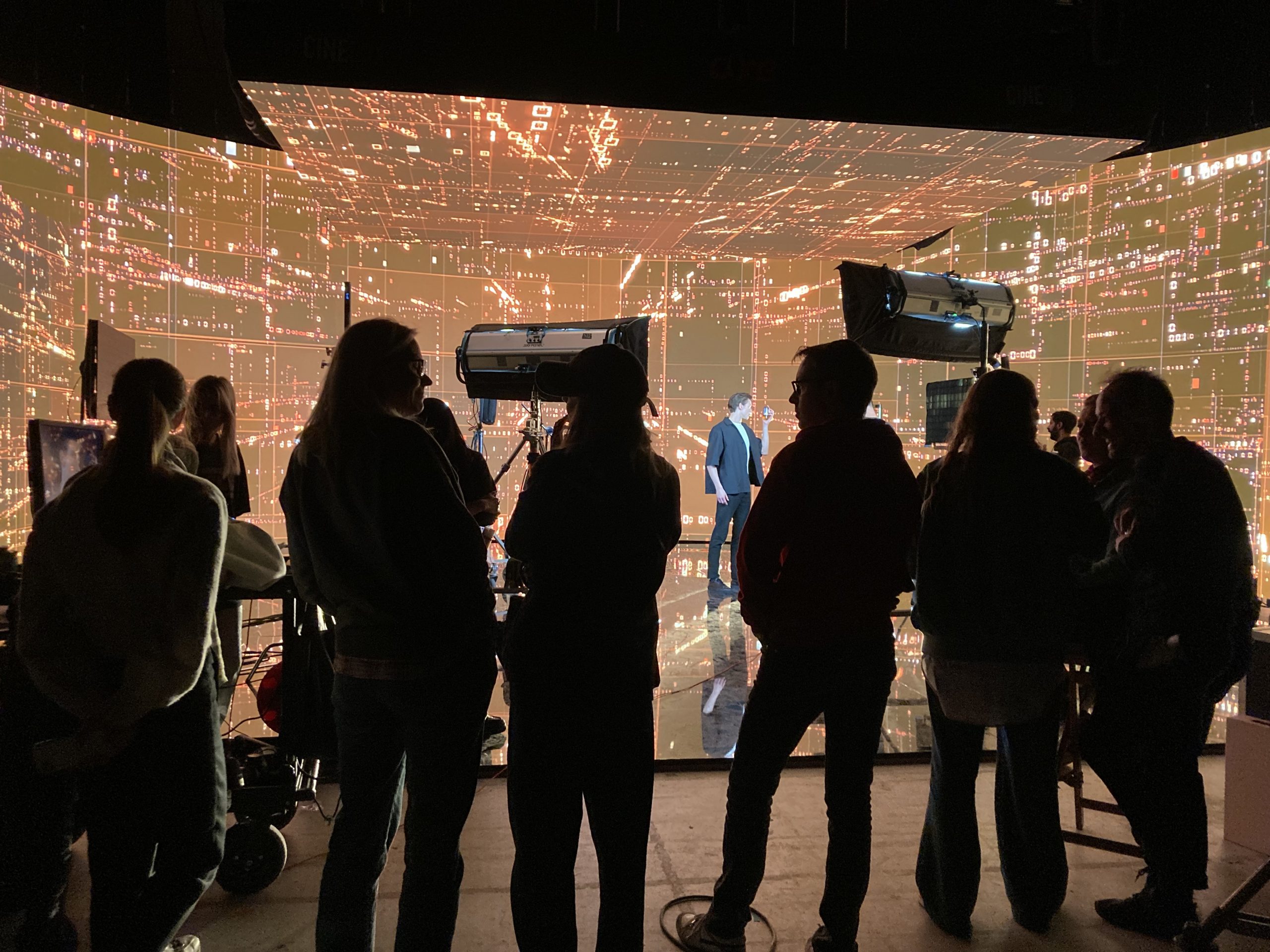
The traditional creative production model continues to shift as the industry embraces more fluid and decentralised ways of working. More and more, brands are bypassing traditional agency pipelines in favour of building direct relationships with production companies, particularly those based in key shoot locations. Agencies themselves are rethinking their structures, increasingly working in closer collaboration with local production partners to bring global campaigns to life in more agile and cost-effective ways.
The result is a production landscape where no two jobs look the same. Approaches vary widely depending on the creative, the budget, and the team behind each project. In this new era, flexibility is everything. As the lines blur between roles and routes to execution, production houses must remain open, adaptive, and ready to meet the evolving needs of clients from every corner of the industry.